
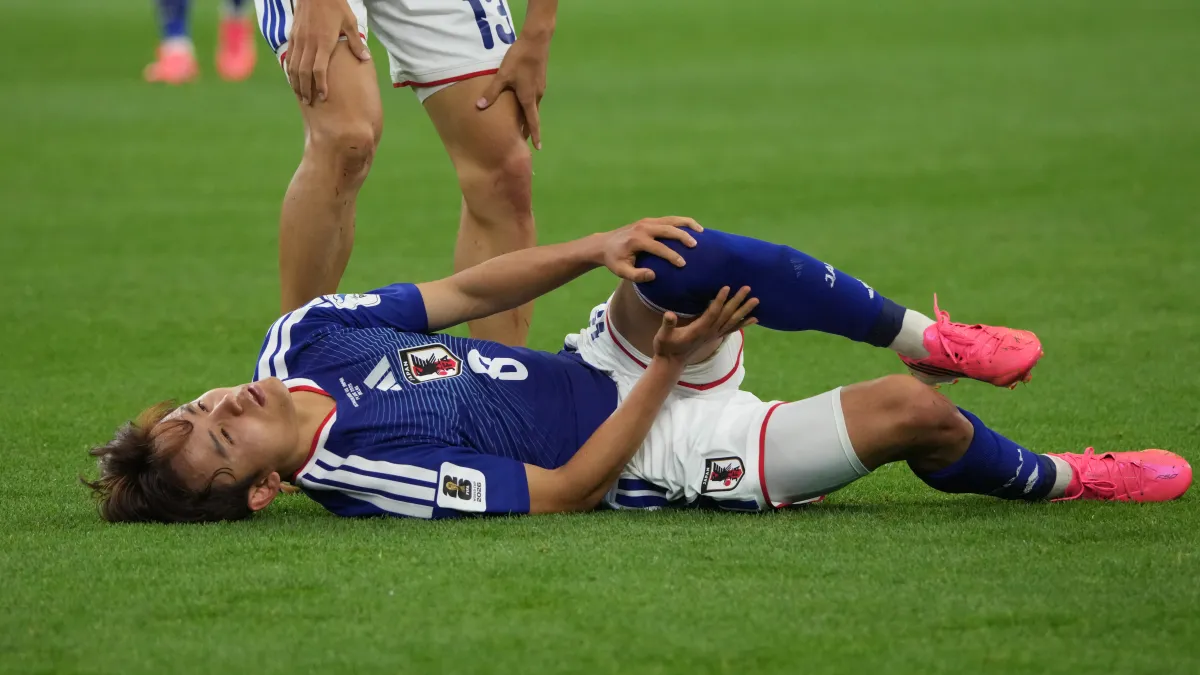
The sprints downfield. The sharp cuts. The competitive superstars. Soccer is a high-intensity sport where every second matters. The stakes are high, and the number of injuries can be too.
Read more The Trump Administration
“Cristiano is Cristiano for a reason, right? Not everybody can be Cristiano,” said Dr. Kevin O’Donnell, an orthopedic surgeon with HCA Kendall Hospital.
Elite athletes make it look easy, but a soccer player’s body is under constant pressure. 18-year-old Alexander Sanchez plays for West Pines United FC. He’s been sidelined for months after a crushing injury that includes tearing his ACL.
“When I landed, I tried turning, but my foot was stuck on the ground, and I twisted my knee,” Sanchez said.
Doctors say Alexander could be out for a full year.
“The worst news that a soccer player can receive in terms of injury would be along the lines of a ligament disruption, ligament tear. Specifically, an ACL tear is generally a season-ending injury, and depending on when that injury occurs in the season, sometimes it’s challenging to get back to the next season,” Dr. O’Donnell said.
Dr. O’Donnell would know. He works with high-level athletes from U.S. sailing to skiing.
“When it comes to taking care of athletes, particularly high-level athletes, there’s a lot of factors at play in terms of how we manage injuries,” Dr. O’Donnell said.
And for world-class athletes, when they go down, fans immediately want to know: How long until they’re back?
“The first thing that happens is a lot of speculation, and the reality is, the only individuals that truly know the extent of the injury are generally the player and the medical team taking care of that player,” Dr. O’Donnell said.
Read more Miami-Dade moving ahead with eminent domain on PortMiami fuel tank property
The notorious ankle sprain is a common enemy, which is why you often see players taped and braced before they even step on the field. But over time, the running, pivoting, jumping, and cutting can take a toll.
Dr. Luis Ramirez Bracho, another orthopedic surgeon, says there are lessons here for everyone.
“I believe that it’s very important for athletes to understand that working on different groups of muscles, including your gluteus maximus, your hip, and also strengthening and balance, is extremely important to avoid them,” Dr. Bracho said.
As soccer grows more competitive, doctors are also seeing more injuries in young athletes, making this a conversation for parents as much as players.
“When you’re looking at injuries and how they break down versus age, we certainly see a lot more injuries in our younger players. But that’s only because of who is playing the sport, right? They have a much higher exposure,” Dr. O’Donnell said.
So while the stars make it look effortless, behind every sprint, cut and pivot is a body under pressure. And whether you’re playing at the World Cup or just in your backyard, the lesson is the same: take care of it.
To help fans better understand what those injuries mean, WebMD has launched a new AI-powered World Cup Injury Tracker. Users can search by player, team or injury type and see how soon athletes can recover and return to the field.
Read more Florida attorney general touts efforts to combat human trafficking in Miami