
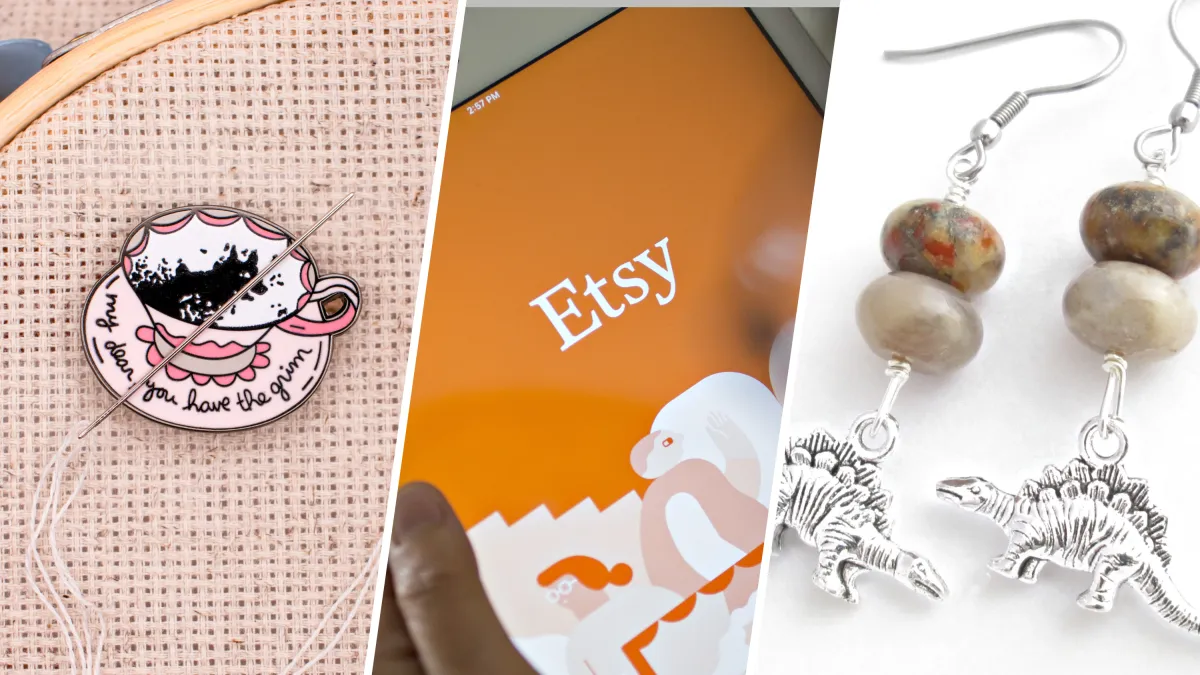
Emmalyn Perez dreamt up the idea for her Etsy business while living out of a van.
Read more The physical cost of sports: Soccer injuries explained, from ankle sprains to torn ACLs
It was 2023, and she was traversing the U.S. with her husband, who picked up a job teaching French online. She was brainstorming ways to pitch in for their travel and day-to-day expenses when she was reminded of an old pandemic-era hobby: cross-stitching, a popular type of embroidery.
“I started posting [on YouTube] about cross stitch during the pandemic,” Perez said. “I realized I didn’t like a lot of the patterns I found … they were really, really old-fashioned.”
So she started making her own, setting up shop on Etsy under the name BewitchedStitchery.
Read more The Trump Administration
Perez’s earliest patterns, which she was able to create on the road and sell digitally on Etsy — widely considered the top digital marketplace for small businesses — took inspiration from pop culture pillars like Taylor Swift and the “Twilight” and “Harry Potter” franchises. Her shop started to gain momentum, and once she settled down in one place, she expanded it to physical items, too.
But that momentum hit a roadblock in February 2025, when President Donald Trump enacted global tariffs on imports from China. The Supreme Court ruled against some of the tariffs but Trump responded by imposing new ones, leaving an unsettled market.
One of Perez’s best sellers at the time was a tiny magnetic accessory called a “needle-minder” used to keep embroidery needles from getting lost or injuring the user. The machines that produce Perez’s product quickly and cheaply in China are heavily restricted in the U.S., because they’re similar to the machines used to make U.S. currency. Relocating production to the U.S. and still making a profit would be nearly impossible.
Read more Miami-Dade moving ahead with eminent domain on PortMiami fuel tank property