
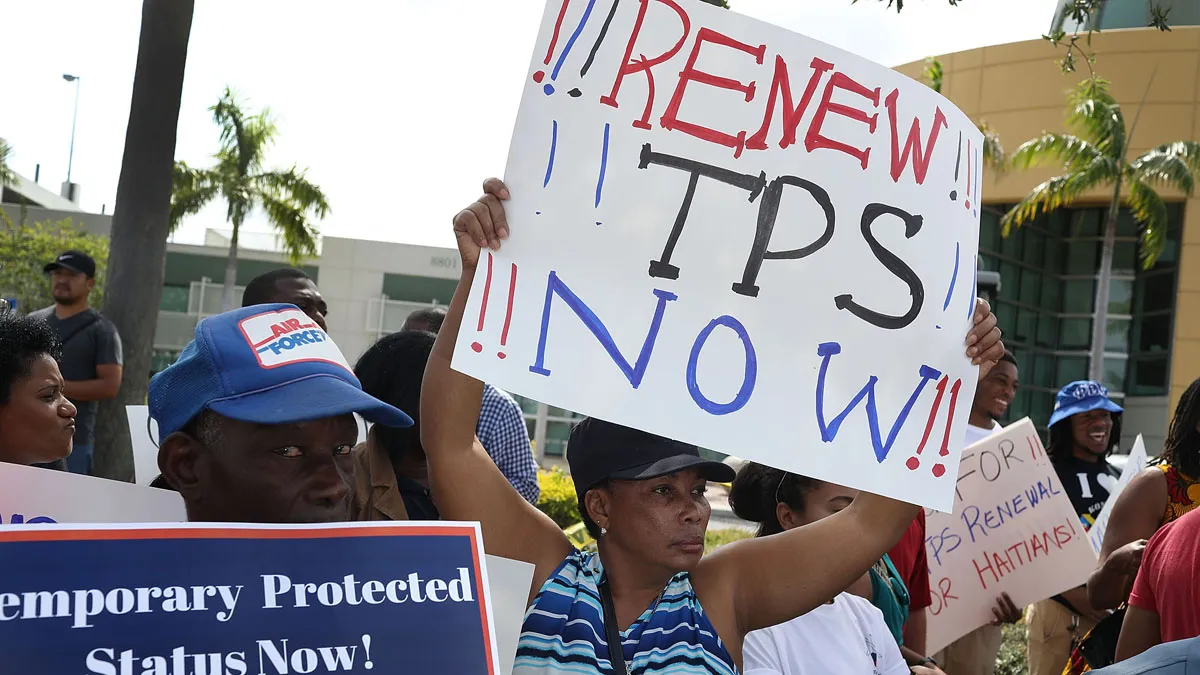
A Florida hospitality organization is asking the federal government for leeway for Haitian and Syrian workers in the industry after a recent U.S. Supreme Court ruling effectively ended their legal status to remain in the country.
Read more News
Following the ruling that allowed the federal government’s decision to end Temporary Protected Status for Haitian and Syrian immigrants, the Florida Restaurant and Lodging Association, along with 11 other state hospitality advocacy groups, signed onto a letter June 29 asking United States Homeland Security Secretary Markwayne Mullin for guidance and an “orderly runway” for employers.
“Many affected employees are long-serving, legally authorized workers who are central to restaurant operations — particularly in states with significant Haitian TPS populations, where their departure could remove a substantial share of the local hospitality workforce overnight,” the letter states.
On June 25, the U.S. Supreme Court ruled the Trump administration could end TPS for both Haitian and Syrian nationals. The TPS program allowed immigrants to remain in the U.S. if the federal government determined it wasn’t safe to return to their home country.
The ruling affects 93,000 workers in Florida, according to the FRLA, many of whom work in the hospitality industry.
In a statement, FRLA president and CEO Carol Dover said TPS holders in Florida contribute an estimated $2.6 billion annually to Florida’s economy.
“As employers work to understand the implications of this decision while continuing to serve millions of visitors during one of the busiest times of the year, our priority is ensuring they have the clarity, guidance, and reasonable transition time they need to comply with federal requirements while minimizing disruption for employees, business operations, and the communities they serve,” Dover said.
The National Restaurant Association and 12 states, including Florida, are requesting: A 90-to-120-day transition period before ending work authorizations for TPS workers; clear guidance and timelines for reverification and E-Verify requirements; and good faith protection for employers while awaiting updated instructions.
On CBS News’ Face the Nation on Sunday, U.S. Rep. Carlos Gimenez, R-Miami, said ending TPS for Haitians would be a “huge mistake.”
Read more Who is ItGirlBri? South Florida TikTok star remembered following deadly shooting
Gimenez, who represents all of Monroe County and parts of Miami-Dade, said TPS is meant to safeguard those fleeing countries in a failed state, like Haiti and Venezuela.
“When there’s good cause for it, it needs to be granted, and I think there’s a good argument for the people of Venezuela and the people of Haiti,” Gimenez said.
State Rep. Dotie Joseph, a Democrat from North Miami who is running for the party’s gubernatorial nomination, also questioned the effect of the federal government’s approach to TPS holders.
“Doing anything we do to vilify this, this labor force at a time where employers are facing 73 percent worker shortages is insane,” Joseph said during an appearance on WPLG’s “This Week in South Florida.”
“All of our key industries, tourism, agriculture, health care, rely on these workers, and it’s not just the workers, like these are people who are our neighbors,” she added.
TPS was enacted by Congress in 1990 and allows the federal government to determine if citizens of another country fleeing due to a natural disaster, war or other “temporary” condition can remain in the U.S.
The TPS designations for Haiti and Syria were both made under President Barack Obama’s administration. For Haiti, it came after a 2010 earthquake killed more than 300,000 people in the Caribbean island nation. For Syria, it came in 2012, a year after the outbreak of a devastating civil war in the Middle Eastern country.
Read more Suspect charged with murder after man fatally shot in Hollywood, police say