
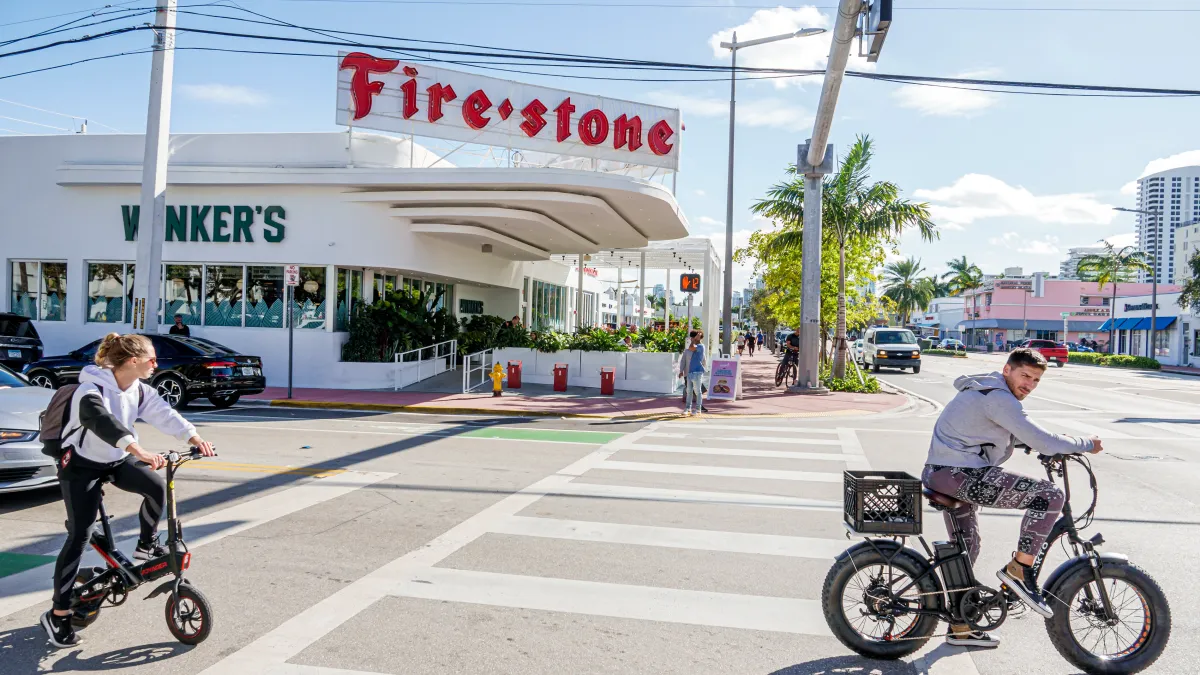
Accidents pertaining to e-bikes have either led to engines exploding or deadly motor vehicle collisions. E-bikes have made headlines for all the wrong reasons as popularity for the mode of transportation continues to be prevalent within South Florida.
Read more Police investigate string of vehicle burglaries in Miami Shores
In 2023, Florida had 234 cyclist deaths, the most of any state, according to the Bicycle Accident Lawyers Group.
Here’s what you need to know about them and how to be safe when riding one.
What are e-bikes?
E-bikes, or electric bicycles, are a type of bicycle that has a battery and an electric motor to help a rider pedal faster with less energy. They come in different styles such as cruiser, mountain and gravel bikes.
“E-bikes are expanding mobility,” said Eugene Rider, the vice president of the Florida Bicycle Association. “E-bikes are increasing health and independence for Florida residents.”
It senses when you are pedaling and essentially gives you a little boost to make you bike from your regular pace up to 28 mph. There are different modes to e-bikes based on how much energy riders want while cruising.
What are the different kinds of e-bikes?
There might be different styles in e-bikes, but they are technically divided into three different categories.
Class 1 e-bikes are pedal assist only, meaning they do require the rider to utilize the pedals. Their maximum speed is 20 mph.
Class 2 e-bikes have the option for riders to use pedal assist or throttle. A throttle allows the bike to move without the rider having to pedal. This type of e-bike can go up to 20 mph.
Class 3 e-bikes are pedal assist only, but they can go up to 28 miles per hour.
What is the current legislation on e-bikes?
On June 25, Gov. Ron DeSantis vetoed an e-bike safety bill that would have required riders to reduce their speed to 10 mph if they are within 50 feet of pedestrians. This bill also would have put together a micromobility safety task force.
He vetoed the bill, saying some of the requirements were impractical.
However, some municipalities in South Florida are taking e-bike safety legislation into their own hands. On Tuesday, the Sunny Isles Beach city commission approved an ordinance to strengthen e-bike safety regulations by adding an age restriction.
Read more Family seeks justice after man arrested for 2019 North Lauderdale murder
Those under 16 years of age will not be able to rent or ride an e-bike.
Riders will also not be permitted to use their e-bikes on sidewalks within the city of Sunny Isles Beach. They will only be permitted on bike lanes or roadways.
First offenders who do not follow these regulations will pay a $250 fine, which increases to $500 for future violations.
Miami-Dade County commissioners also approved a measure that would regulate e-bikes, specifically on the Rickenbacker Causeway, which is a county roadway.
Maximum speeds for e-bikes and scooters will now be 20 mph, and they cannot be operated on sidewalks.
Future of e-bike safety?
Under Florida state law, e-bikes are recognized and treated as regular bikes. Despite this, both riders and pedestrians can integrate a few safety measures into their everyday lives.
The Naval Postgraduate School recommends riders always wear a helmet, buy an e-bike with built-in safety measures, and don’t ride with a passenger if your bicycle is not built to host one.
The school also reminds riders to continue following vehicle code, such as stopping at stop signs, signaling when turning and more.
“But all of these locales are looking to put in a local safety response, but it’s more than just the e-bike riders or it’s more than just the e-scooter riders,” Rider said. “It is a need to have the drivers be aware that there are pedestrians and cyclists that are on the road.”
Since DeSantis vetoed the bill, it’s now up to local governments to decide what measures they want to put into place.
Read more Police chase that began in Hallandale Beach ends with bailout into Fort Lauderdale home