
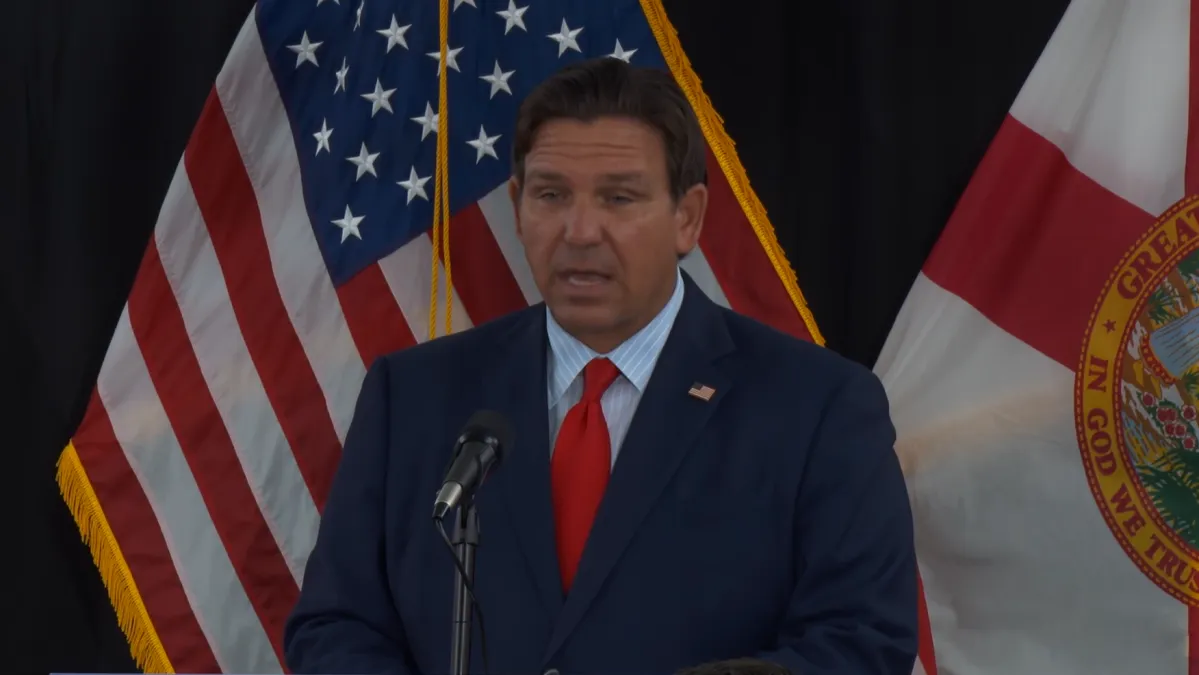
Gov. Ron DeSantis has made a large property tax cut ballot measure central to his message in his last year in office, and on Wednesday he signed two bills in line with that priority.
Read more Video shows hail falling in Miami Gardens amid sudden severe thunderstorm warning
The bills are designed to make it harder for city and county governments to hike property taxes and require them to post more information online about their budgets.
“This is something that will be protecting taxpayers,” DeSantis said during a bill signing ceremony in Bradenton.
Under the first bill (SB 4F), local governments and special taxing districts won’t be able to use the rise in per capita personal income when calculating the maximum millage they can approve for property taxes.
Cities and counties can approve a rate that is 10 percent more than the rolled back rate – or the millage rate needed to generate the same revenue as the previous year as property values rise – if two-thirds of their governor board approves. But now they won’t be able to factor in the rise in personal income growth, making it harder to raise rates.
The bill was passed during the special session last month when lawmakers also approved the property tax ballot measure (SB 2F) which would increase the homestead property tax exemption from $50,000 to $150,000 in 2027 and to $250,000 in 2028.
Read more Suspect arrested in 2019 cold case murder of 17-year-old in Miami Gardens
The ballot measure requires 60 percent support from voters in November to pass.
The bill DeSantis signed Wednesday passed along largely partisan lines, with Democrats opposed and Republicans in favor. But three Senate Democrats – Sens. Mack Bernard of West Palm Beach, Daryl Rouson of St. Petersburg and Barbara Sharief of Miramar – voted for it.
The bill took effect immediately upon DeSantis’ signature.
The other measure (HB 1329) was a main priority for Chief Financial Officer Blaise Ingoglia, who has helped push DeSantis’ property tax proposal by reviewing the budgets of local governments throughout the state, arguing they’ve taxed and spent excessively in recent years.
“Government is never going to right size itself, it’s going to have to come from the taxpayers,” Ingolia said at the bill signing ceremony.
The bill imposes new requirements on city and county governments, such as publishing a quarterly report on employee compensation and conducting a budget cutting exercise each year.
“This bill clears the fog and strips away the ambiguity that has cloaked local governments’ excessive and wasteful spending,” Ingoglia said.
Read more FedEx driver accused of stealing more than $31K in Apple products in Pinecrest, police say
The bill takes effect Jan. 1, 2027.