
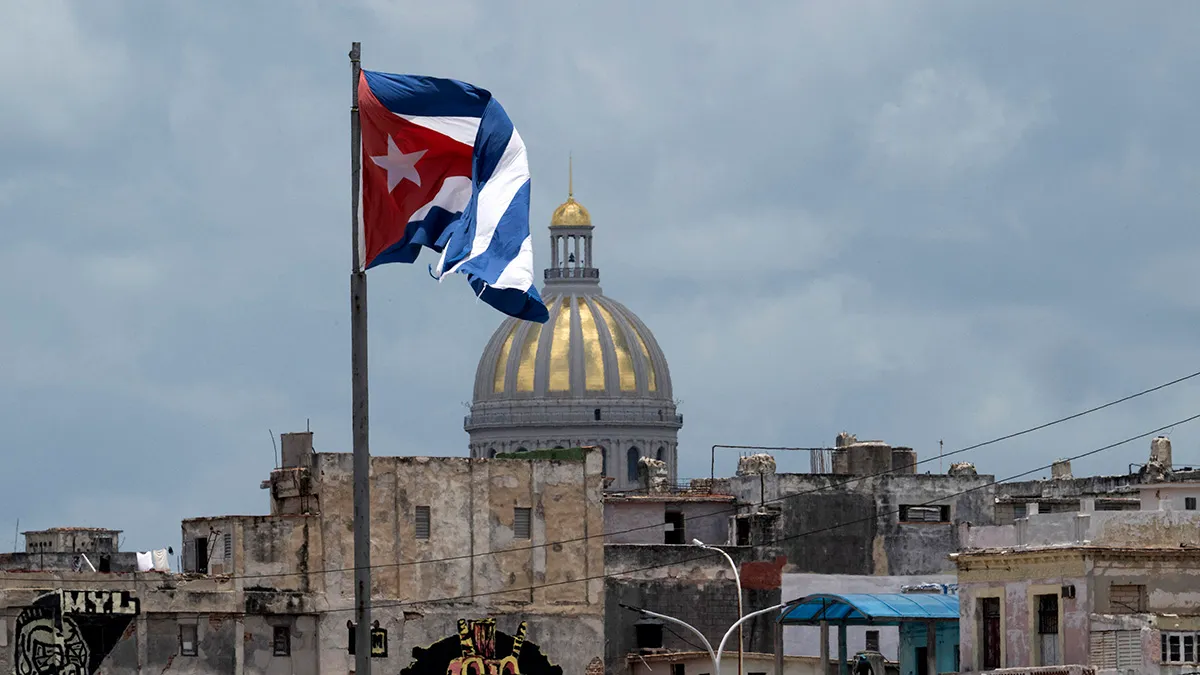
The Trump administration on Monday imposed a new round of sanctions on 10 Cuban government entities, expanding its effort to squeeze the island’s communist government by targeting organizations tied to both its security apparatus and some of its most important economic sectors.
Read more New data shows ‘sharp’ drop in migration to Florida, UF study finds
The sanctions reach beyond military-linked organizations to include Cuba’s Ministry of Tourism, energy companies, a major foreign trade group, a maritime transportation company and a state-owned financial services firm that help generate revenue for the Cuban government.
U.S. officials say the entities either finance the Cuban regime or play a role in the repression of political dissent.
“The United States will continue to use every tool at our disposal to both address the national security threats posed by the Cuban Communist regime, and to drive the economic and political reforms to give Cuba a better future,” Secretary of State Marco Rubio said in a statement.
Among the highest-profile entities sanctioned is Cuba’s Ministry of Tourism, or MINTUR, one of the government’s largest generators of foreign currency outside the military-run conglomerate GAESA. The sanctions also target state-owned energy companies ENETEC S.A. and COREYDAN S.A., foreign trade company GECOMEX, financial services firm CAUDAL and maritime transportation company GEMAR.
The State Department also designated the Territorial Troops Militia (MTT), the Association of Combatants of the Cuban Revolution (ACRC) and the Rapid Response Brigades, organizations Washington says support Cuba’s security apparatus through surveillance and repression.
Under the sanctions, any assets the designated entities have in the United States are frozen, and U.S. individuals and companies are prohibited from doing business with them.
The more significant impact, however, could be felt outside the United States.
The sanctions expose foreign companies, banks, insurers and shipping firms to potential penalties if they continue conducting certain business with the designated entities while maintaining access to the U.S. financial system. That added risk could discourage international companies from working with some of Cuba’s largest state-run enterprises.
The sectors most likely to feel the pressure are energy, shipping and foreign trade.
Read more What is cyclosporiasis and what can you do to treat or avoid it?
ENETEC and COREYDAN handle fuel imports that are critical to Cuba’s already strained electrical grid. GECOMEX oversees a significant share of the country’s imports and exports, while CAUDAL provides insurance and financial services that facilitate commercial activity. GEMAR plays a major role in Cuba’s maritime transportation network.
If foreign financial institutions, insurers or shipping companies become more reluctant to work with those entities, Cuba could face additional hurdles importing fuel, equipment and other essential goods. Analysts note that the broader effect of the sanctions will depend largely on whether international businesses decide the risk of doing business with the sanctioned entities outweighs the benefits.
The announcement marks the latest escalation in the administration’s Cuba policy.
Last month, Rubio announced sanctions against five entities affiliated with the military-controlled conglomerate GAESA, along with organizations involved in financial, logistics and mining activities that U.S. officials say generate revenue for the Cuban government.
Earlier this month, the Treasury Department sanctioned Cuban President Miguel Díaz-Canel, members of the Castro family and several state institutions, including agencies linked to the Cuban armed forces, saying the measures were a response to actions the United States considers contrary to its national security and foreign policy interests.
Cuba condemned Monday’s sanctions.
Foreign Minister Bruno Rodríguez accused Washington of intensifying its economic pressure campaign against the island.
“The U.S. government continues to intensify the war against the people of Cuba, their living conditions, and their sources of livelihood,” Rodríguez said in a statement. “The announcement … of additional coercive measures is a clear manifestation of the criminal and genocidal intent” to punish the Cuban people.
The State Department said the sanctions are intended to pressure the Cuban government to improve human rights, curb political repression and promote democratic and economic reforms.
Read more Boy, 2, was underwater in North Lauderdale pool for 10 minutes, official says