
The Cuban government is pushing back against criticism from President Donald Trump as the administration continues to increase pressure on the communist-led island nation.
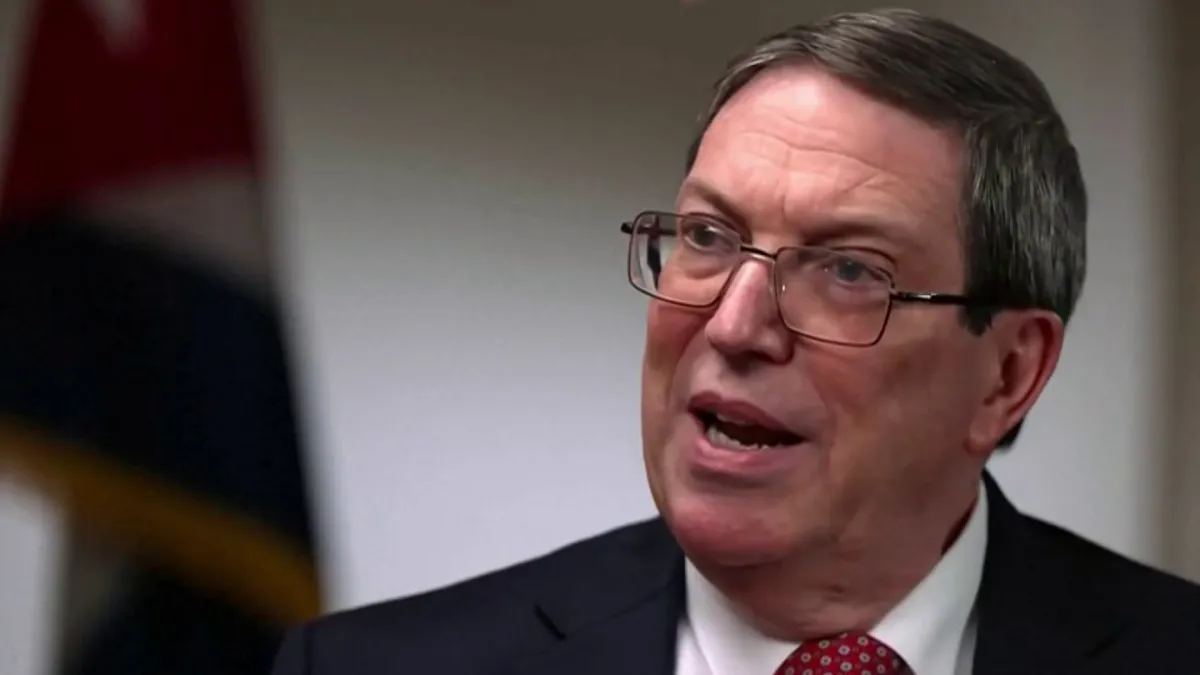
Following Trump’s speech at the United Nations, NBC News’ Andrea Mitchell sat down exclusively with Cuban Foreign Minister Bruno Rodríguez, who defended his government’s record and denounced U.S. policy toward Cuba.
The interview came after Trump renewed his criticism of Cuba during his address to the U.N. General Assembly.
“My administration is also seeking a fundamental change in the situation in Cuba where the communist regime is under great pressure, the biggest pressure they’ve ever been under. It’s an absolutely failed state,” Trump said.
In the exclusive interview, Rodríguez described Trump’s speech as “aggressive” and accused the United States of imposing what he called an economic and energy blockade against Cuba.
“Cuba is not a threat to the U.S. national security, its people or its national interest,” Rodríguez said. “The threat is the economic blockade.”
The comments come as Cuba faces one of its most severe economic crises in years. The island has struggled with recurring power outages, fuel shortages and difficulties obtaining basic goods, issues that have fueled public frustration and migration.
Rodríguez blamed recent hardships on U.S. sanctions, including what he characterized as an oil blockade.
When asked by Mitchell about the impact of the frequent blackouts on ordinary Cubans, Rodríguez said the situation has been devastating.
“It is painful, very painful,” he said. “It is a true act of collective punishment. It is an act of genocide, according to international conventions prohibiting both crimes.”
Read more Self-proclaimed ‘witch’ guilty in murder of woman who vanished in South Florida
Despite ongoing pressure from Washington, there have been indications that some level of communication between the Trump administration and the Cuban government continues.
Secretary of State Marco Rubio, a longtime critic of Cuba’s communist government, acknowledged the nation’s deep-rooted economic and political challenges while suggesting progress will not happen quickly.
“You don’t reverse 60-something years of mismanagement, corruption, and incompetence in six months,” Rubio said. “But I do think that Cuba has a golden opportunity to place itself on an irreversible path towards a better future. And we are prepared to be helpful in that regard if they’re open to it, obviously.”
During the interview, Rodríguez confirmed there have been conversations between officials from both governments, though he declined to identify who has participated in those talks.
“I shouldn’t provide further details, but I can confirm to you that there have been some episodes of conversations,” Rodríguez said. “I reiterate the willingness to continue with those in the future, despite the lack of results, due to the lack of understanding and the restrictive attitude on the part of the U.S.”
The foreign minister also declined to answer a question about whether Raúl Castro’s grandson has taken part in those discussions.
The comments underscore the continued tensions between Washington and Havana at a time when the Trump administration is seeking changes from Cuba’s communist government while the island struggles with significant economic difficulties.
Rubio has said the president has multiple options available to increase pressure on Cuba, including sanctions. He declined to speculate on potential military measures.
Read more South Florida woman accused of posing as nurse, offering post-surgery services