
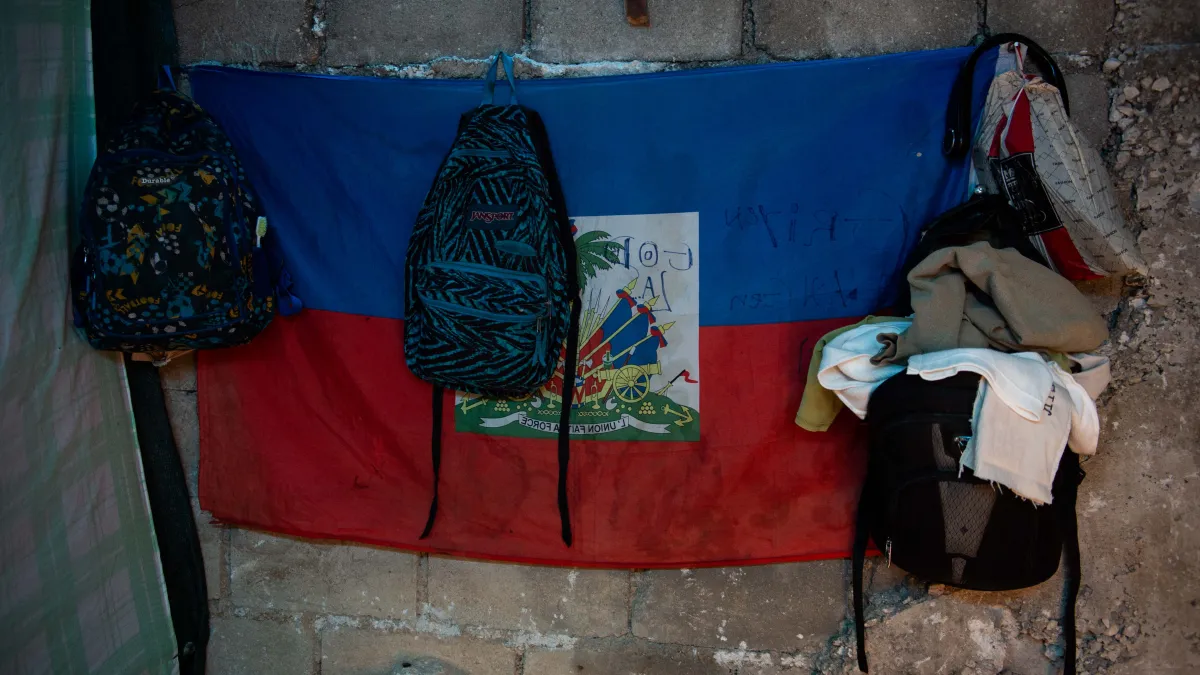
A South Florida mother of five dreads reliving the violence she and her family endured in the last days of living in Haiti.
Read more Early voting in Miami-Dade primaries starts next week
Her home was invaded by bandits and she and her family escaped by squeezing through an iron fence outside the home. She said she and her children were badly cut by the fence. She said until this day, scars on their bodies show the evidence of that terrifying day.
In 2021, the woman, who is too afraid to share her identity, came to South Florida. Five years later, she is again living in fear and anxiety. This time, it’s over the uncertain future of her family after Temporary Protected Status for Haiti ended.
The woman is among the 300,000 Haitians who now face the possible loss of legal protections that have allowed them to live and work in the United States. This comes after a federal ruling affecting Temporary Protected Status, or TPS, for Haitians.
The woman has a young son who is a U.S. citizen and requires ongoing medical care. She spoke to NBC6 in Haitian Creole. Her interview was translated to English for this article.
“I love my home country. There’s no other place that’s more comfortable than your home country,” she said via translation. “The only problem that I have about going back to my home country is the insecurity.”
The mother said uncertainty surrounding TPS has affected her entire family. She said she is afraid to send her children to school in the coming weeks and described the emotional toll the situation has taken.
“The kids are very stressed. The entire family is stressed,” she said. “We’re so stressed that we have missed doctors appointments for my youngest child who has Down Syndrome and other illnesses. I’m scared. I don’t want to go out.”
Read more Miami-Dade tests voting process to ensure accuracy ahead of primaries
She said she left Haiti after violent gangs took over her neighborhood. The violence became so severe that she was granted TPS by the U.S. government.
“That’s a moment I don’t want to relive,” she said. “And every time I hear that I have to return to Haiti, I get stressed. We can’t even sleep.” She said her neighborhood in Port-Au-Prince is still gang-infested.
After living in South Florida for more than five years and building a life in the community, the decision to end TPS for Haiti has raised questions about what comes next.
TPS was first granted to Haitians after the devastating 2010 earthquake, allowing them to live and work legally in the United States. A Supreme Court decision has now cleared the way for the Trump administration to end those protections.
“I would want God to touch the hearts of the authorities and reinstate TPS,” the mother said.
The Department of Homeland Security is standing by its decision, saying TPS was never intended to serve as a long-term immigration program. Officials say the designation was always meant to be temporary.
Read more Video shows suspect firing several shots at apartment in North Miami Beach