
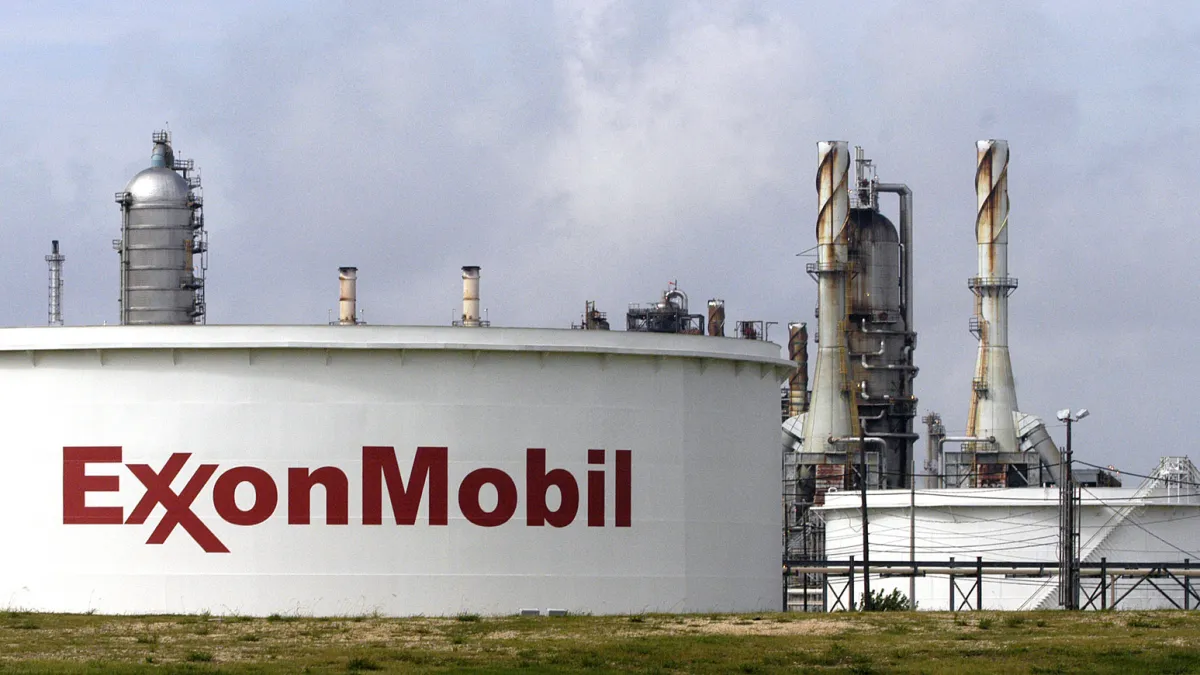
The U.S. Supreme Court has handed Exxon a significant legal victory in its decades-long effort to seek compensation for property confiscated by Cuba’s communist government following the 1959 revolution.
Read more FedEx contractor charged with stealing Nike merch during monthslong investigation, police say
The ruling makes it easier for Exxon to pursue legal action directly against Cuban government entities under the Helms-Burton Act, a law that allows U.S. nationals to seek damages for property seized by the Cuban government after Fidel Castro came to power. The 6-3 decision was the second in as many months in favor of U.S. owners of Cuban property that was confiscated by the Communist government more than 65 years ago.
Exxon is seeking approximately $1 billion in compensation for assets that were nationalized during the revolution.
“This opens the door for lawsuits under Helms-Burton directly against Cuban governmental agencies,” said Pedro Freyre, an attorney with the Akerman law firm who specializes in Cuban confiscated property claims.
Previously, many lawsuits targeted foreign companies accused of benefiting from confiscated Cuban properties. Under the Supreme Court’s interpretation, Freyre said, plaintiffs can now pursue claims directly against Cuban state-owned enterprises.
“In other words, you don’t need to sue the English company operating a confiscated tobacco factory,” Freyre said. “You can sue the Cuban state tobacco monopoly itself. That’s what this decision allows.”
The decision follows another recent legal setback for Cuba. Last month, the Supreme Court allowed lawsuits to proceed against several major cruise lines — including Royal Caribbean, Carnival, Norwegian and MSC — over their use of the Port of Havana, which was confiscated by the Cuban government in 1960.
While the latest ruling expands legal options for claimants, collecting any financial judgment against the Cuban government remains a major challenge.
Freyre believes the growing number of successful court rulings could ultimately increase pressure on both Washington and Havana to negotiate a broader settlement for thousands of outstanding property claims.
“It incentivizes both Cuba and the U.S. to seek a way to solve all the outstanding claims, whether they are from Cuban Americans, Cubans on the island or U.S. corporations,” he said.
The court’s decision comes amid increasingly strained relations between the United States and Cuba.
Last month, the U.S. Department of Justice announced murder charges against former Cuban President Raúl Castro in connection with the 1996 shootdown of two Brothers to the Rescue aircraft, an incident that killed four people.
Read more 16 banned from Carnival Cruise after massive brawl breaks out at PortMiami
Before the first Trump administration, every president had suspended the provision because of objections from U.S. allies doing business in Cuba and the effect on future negotiated settlements between the U.S. and Cuba.
But Trump lifted the suspension in 2019, and Exxon Mobil filed its lawsuit the same day.
Justice Brett Kavanaugh wrote for the conservative majority that it “would make little sense” if the law allowed the president to decide whether suits can proceed against Cuban interests while also protecting them.
Justice Elena Kagan wrote in a dissent for the three liberals that the 1996 law simply contains no provision eliminating the sovereign immunity shield.
The U.S. Foreign Claims Settlement Commission, an arm of the Justice Department, said in 1969 that the value of Exxon Mobil’s property in Cuba is $71.6 million, plus 6% annual interest beginning in 1960. That would be worth more than $1 billion today, Kavanaugh wrote.
In addition, the commission found that nearly 6,000 individuals and businesses held claims worth $1.9 billion, before adding in interest or damages.
The Trump administration has also intensified economic pressure on Cuba by threatening sanctions against countries that supply the island with oil, contributing to mounting concerns over Cuba’s worsening energy crisis. The country has experienced widespread blackouts and continues to struggle through its deepest economic crisis in decades.
In addition, the United States announced new sanctions targeting companies allegedly linked to GAESA, the powerful military-controlled business conglomerate that dominates much of Cuba’s economy.
Secretary of State Marco Rubio said the sanctions are intended to limit the Cuban military’s economic influence.
“GAESA has persistently served as the main vector for regime elites to steal the island’s few resources, diverting them for repression, anti-American subversion and spying instead of schools, power plants and basic necessities for the Cuban people,” Rubio said.
Read more Senate rebukes Trump by approving House-passed measure calling for end to Iran war