
Behold, the “super” El Niño! Ahem…a forecast for a strong El Niño. But if it’s “Mighty” Casey at the Bat, then we’re going to win the game! Right? RIGHT?!
Read more Man who barricaded self at Oakland Park apartment complex dies after being shot, BSO says
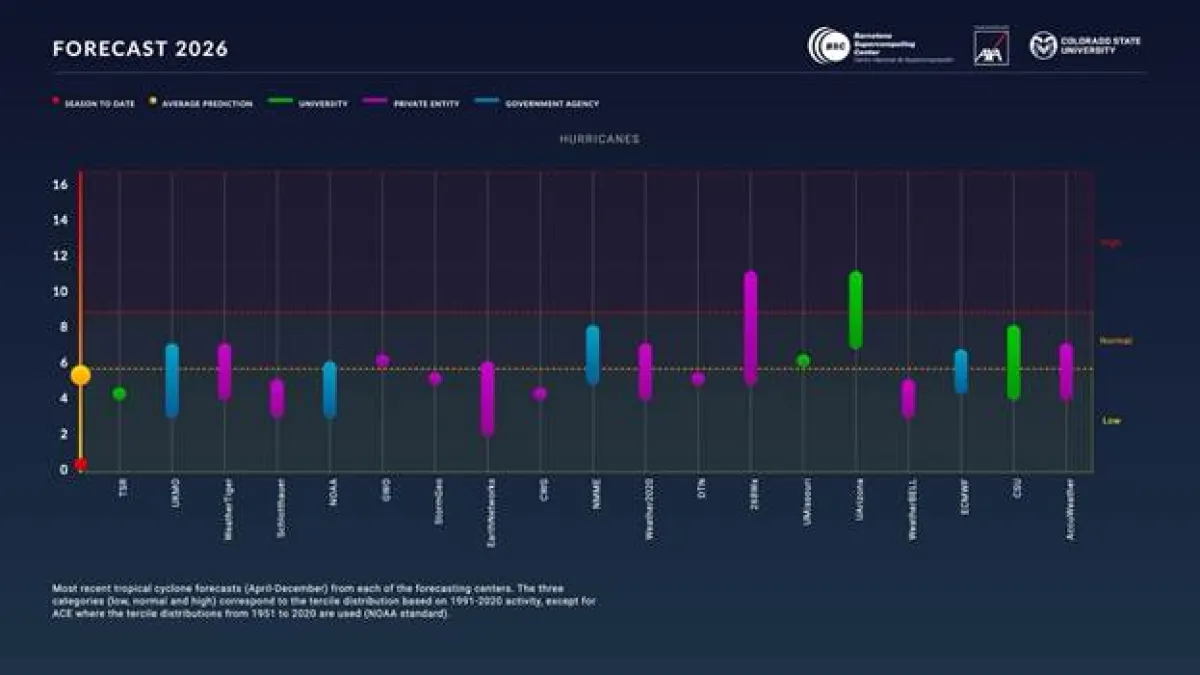
Everybody is expecting a below-normal Atlantic hurricane season. NOAA’s seasonal outlook says there’s a 55% chance that the season will bring fewer storms. And experts at Colorado State University—the entity that has been issuing seasonal hurricane forecasts the longest—also point to a slightly below normal season with six instead of the normal seven hurricanes.
Even more encouraging: if you average out the Atlantic seasonal outlooks from nearly 20 academic, public and private entities, only five Atlantic hurricanes are forecast this year.
Five hurricanes would match the total number for the Atlantic basin in 2025.
Last year, Floridians were finally able to rest after being hit by hurricanes for three consecutive years (Ian 2022, Idalia 2023, Helene & Milton 2024). But last year also reminded us of a new, alarming worldwide trend towards stronger typhoons and hurricanes.
Four of the five hurricanes last year reached Category 4 or 5 intensity. And at the expense of Jamaica, Major Hurricane Melissa tied for the strongest landfalling storm in the history of the Atlantic basin.
Climate change has warmed the oceans across the globe, which has led to a greater propensity for tropical cyclones to reach Cat 4 & 5 status—the strongest and most catastrophic type of hurricanes. Especially in this El Niño year, the old adage of “it only takes one” has never been more important. The “one” could be devastating for whoever is in the way.
Read more 2 hospitalized after being shot near IHOP in Cutler Bay, deputies say
South Florida’s infamous Hurricane Betsy (1965) happened in a strong El Niño year. 2023 had a strong El Niño, but Idalia hit the Panhandle. 2004 was an El Niño year too, and hurricanes Charley, Frances and Jeanne all struck the state. And one of the most infamous storms to ever strike the U.S. happened in an El Niño year: 1969’s Hurricane Camille, which devastated Mississippi.
My message is that you can’t get too comfortable with the notion that a strong or even “super” El Niño will keep hurricanes away this year.
For now, NOAA has issued an El Niño Watch as equatorial sea surface temperatures in the central and eastern Pacific Ocean continue to trend higher, which should eventually result in stronger storm-inhibiting westerly wind shear across the Atlantic’s hurricane breeding grounds. But even in an overall hostile environment, there are bound to be stretches of days in which the shear weakens, and opportunities materialize for stronger storm formation.
In preparation for this season, know your home’s vulnerability and potential exposure to wind and water. Make a plan and be ready. I’ll be with you again on NBC6. And don’t forget that, given the well- documented higher chance for storms to undergo rapid intensification, any window of opportunity—even with an El Niño—could lead to disaster.
Read more Miami’s Haitian community celebrates the country’s first World Cup berth in 52 years
Then there would be no joy in Mudville.