
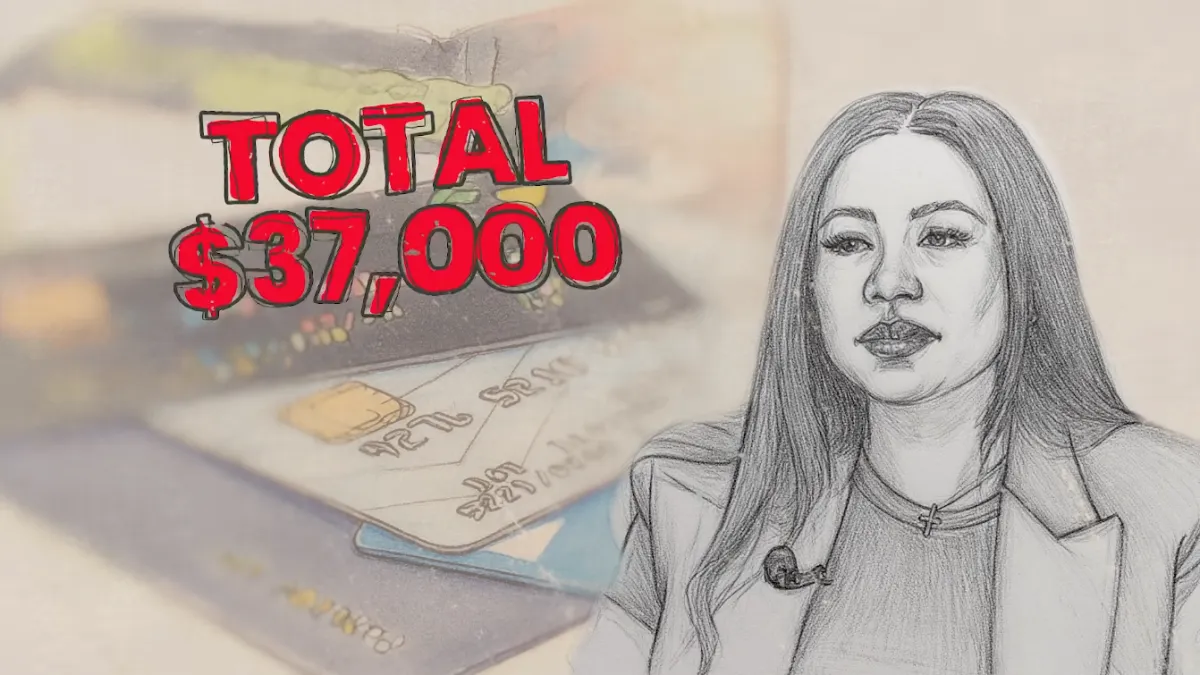
For Jennifer Betances Brito, building the life she dreamed about came with a financial cost.
Read more How much could Amendment 3 save homeowners?
The 32-year-old said she moved to South Florida in 2021, determined to finish her education and build her own business.
Today, she works a full-time job while running Brito Beauty, a makeup artistry and styling business. But as her dreams grew, so did her debt.
“Just everything was piling up,” Brito said.
Between credit cards and student loans, Brito said she eventually accumulated about $37,000 in debt, much of it tied to high-interest credit cards.
“It was really hard for me to just manage all the debt that I had at the time,” she said.
The financial pressure took a toll.
“I was nervous, anxious, depressed,” Brito said. “I didn’t know a way out. I just knew I had to make this change.”
Brito’s experience comes as Americans continue to carry historically high levels of credit card debt.
U.S. consumers had roughly $1.26 trillion in credit card balances in the second quarter of 2026, according to the Federal Reserve Bank of New York. That figure is just below the record $1.28 trillion reported the previous year.
South Florida consumers are also carrying significant credit card balances.
A recent Experian analysis found that Miami ranked second among U.S. metropolitan areas for the highest average credit card balance, at just over $8,000.
Floridians also carry an average of about $6,690 in auto loan debt, according to Federal Reserve data from the second quarter of 2026, which is higher than the national average.
“People would rather talk about almost anything than their money,” said Thomas Nitzsche, a financial educator with Money Management International, a nonprofit credit counseling organization.
Nitzsche said many of the people who seek help from the organization are already struggling to make their monthly budgets work.
Read more Could Amendment 3 affect police, fire and other services?
“So much of people’s paycheck is going to essentials that there just isn’t enough wiggle room,” Nitzsche said. “People run out of runway.”
The average client his organization works with has a monthly budget shortfall of about $200 to $300, he said.
That gap can lead people to rely on credit cards to cover expenses, potentially making the problem worse as interest accumulates.
Money Management International says it has seen a 7% increase in people seeking credit counseling compared with last year.
Nitzsche said getting out of debt can start with some basic steps: creating a budget, cutting unnecessary expenses, and asking for help before the situation becomes more serious.
“If you start seeking options early, you can often work with your creditor to get back on track or through a nonprofit debt management program like ours,” he said.
Waiting until an account goes into collections can make the situation more difficult, he said.
Brito decided to seek credit counseling in 2024.
She said the program helped consolidate her debt into one loan and reduce her annual percentage rate, making her payments more manageable.
“It made it more affordable for me at the end of the day,” Brito said.
So far, Brito has paid off about $14,000 of her debt.
For her, paying down the balance is about more than simply improving her finances. She said she wants to build something she can eventually pass on to her children.
“I wanted to create what was mine, something that I can eventually leave to my kids,” Brito said.
Financial experts say consumers don’t have to wait until they are overwhelmed to seek help.
Read more Will your property assessment change if Amendment 3 passes?
Here are several steps to consider:
- Create a bare-bones budget.
- Choose a payoff strategy.
- Contact your creditors.
- Consider nonprofit credit counseling.
- Research before paying for help.
- Be cautious about upfront fees.