
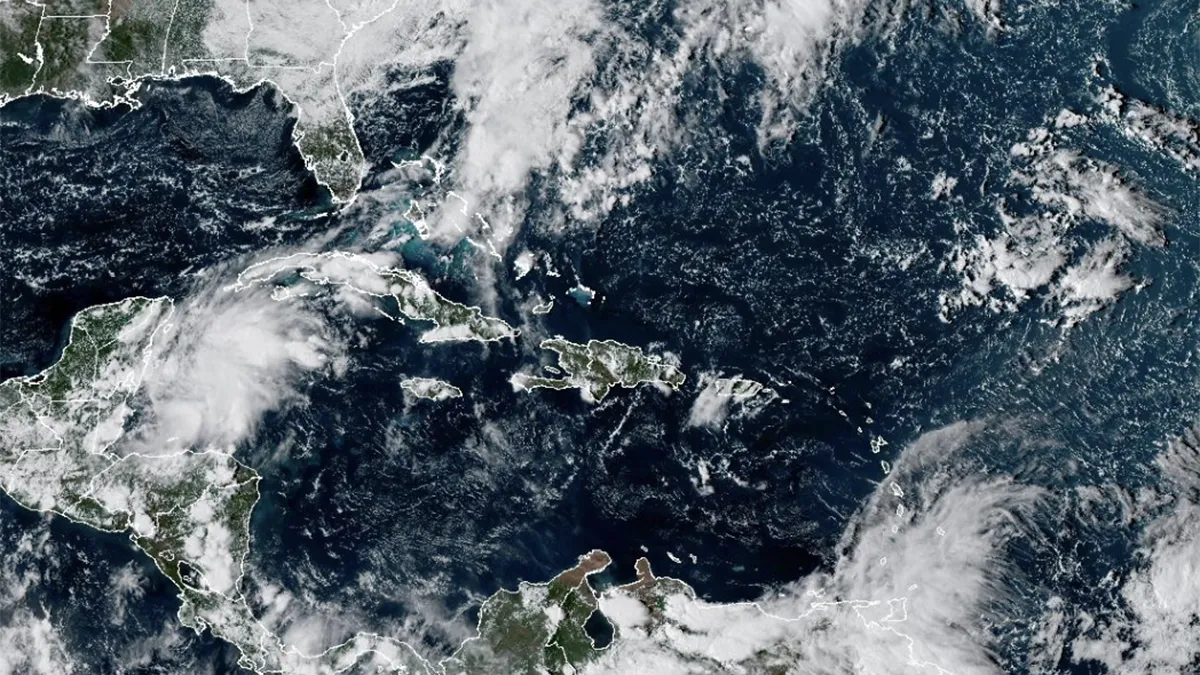
The 2026 Atlantic hurricane season was expected to be slow. But not dead.
While six tropical storms have formed thus far, none have been able to attain hurricane status. Fay came closest earlier in September, but winds peaked at 70 miles per hour.
Read more Man accused of shooting into driver’s car during Palmetto Expressway road-rage incident
No year has gone without an Atlantic hurricane in the modern era (since 1950). Looking at the full historical record back to 1851, only 1907 and 1914 had zero Atlantic hurricanes.
Because prior to 1950 there were no hurricane hunters or weather satellites, what happened in the Atlantic basin over a century ago isn’t entirely certain. But National Hurricane Center specialists have used sound scientific methodology to reconstruct those (now ancient) seasons.
Another measure of tropical cyclone activity, known as ACE (for Accumulated Cyclone Energy), is at record lows too. ACE is a metric that accounts both for storm intensity and duration. Any way you slice it, it’s a snoozer of a season in the Atlantic—not that anyone is complaining.
Those of us living in hurricane prone areas are likely aware that the El Niño phenomenon tends to dampen tropical activity in the Atlantic. Nevertheless, damaging tropical storms and hurricanes can still happen with El Niño. But this year is different.
The 2026 El Niño has set a record as the strongest ever recorded. That very warm water in the equatorial eastern Pacific Ocean is changing weather patterns around the world. For example: typically, in summer, winds aloft weaken in the Caribbean and the Main Development Region of the Atlantic between the Antilles and Africa. But this summer, those westerly winds were howling—a condition that has continued into the fall.
Plus, the air over the Atlantic basin has been mostly sinking. Clouds don’t form in sinking air, much less clusters of thunderstorms that can become fledgling tropical disturbances. Atmospheric stability puts a cap on hurricane development.
Read more BSO deputy and driver hospitalized after crash in North Lauderdale
While there has been a fair share of Saharan dust outbreaks, these are actually running below normal in 2026. So, it’s not the dust that’s killing storms.
Neither is the hot ocean. Water temperatures in the Atlantic are again much warmer than historical norms, as is the case across the vast majority of the globe. That’s especially true in the Gulf of Mexico, the subtropical Atlantic, and parts of the far North Atlantic Ocean.
But even with sea surface temperatures running warm again, dry and stable air over the Atlantic combined with very strong wind shear produced by the remarkably powerful El Niño looks to keep the rest of the season mostly quiet.
That is not to say that no threats will emerge. I can’t rule out a window of a few days in which these hostile conditions for hurricanes will abate. October is historically the busiest month in Florida for tropical storm and hurricane landfalls.
Don’t tune out. Stay informed. But fingers crossed that the rest of the 2026 Atlantic hurricane season stays as dead as a doornail.
Read more Driver in custody after pursuit of car possibly linked to Palmetto Hospital carjacking