
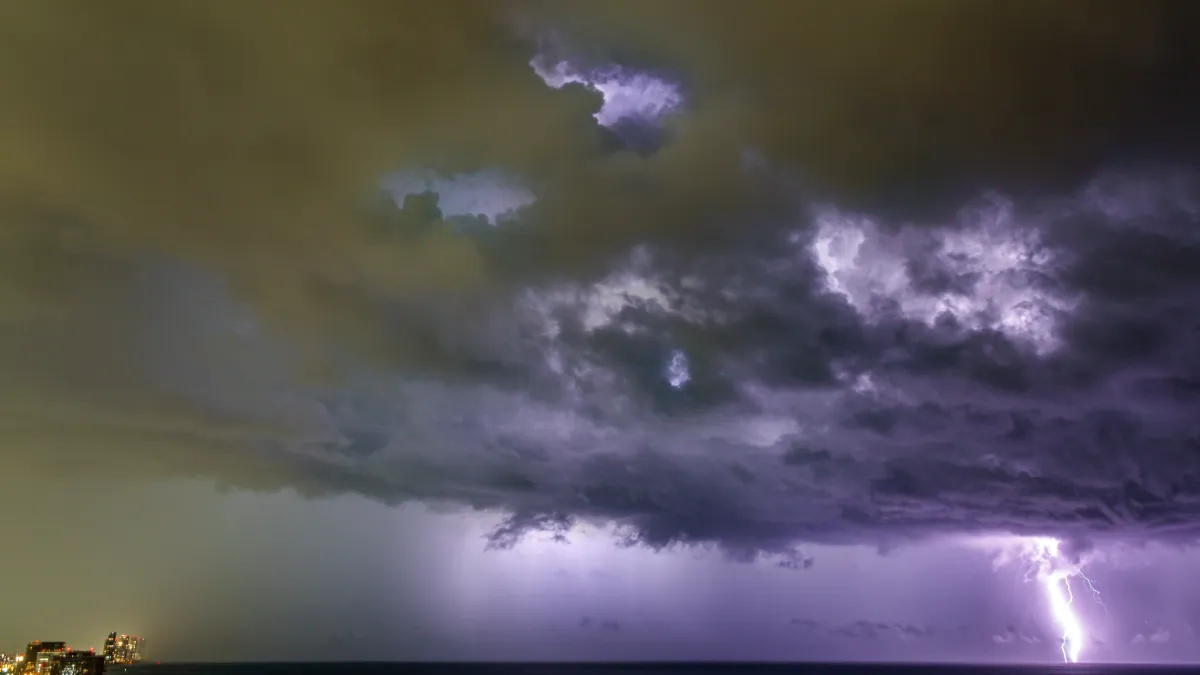
Right in the middle of Florida’s rainy season and frequent thunderstorms, reports of lightning striking objects or people often become news and a public concern, including the tragic deaths linked to this natural phenomenon.
Read more Man found guilty of sexual battery in 2023 attack at woman’s Parkland home
On Thursday, an off-duty Miami-Dade Sheriff’s Office deputy was taken to the hospital in stable condition after his vehicle was struck by lightning.
And a few weeks ago, 31-year-old Kenya Glasgow and her 2-year-old daughter kennedi were struck as they tried to get inside during a storm in Margate. Both of them died at the hospital.
The recent strikes are also putting some common beliefs about lightning to the test.
Florida, with five deaths, is the state with the most lightning-related fatalities this year, according to the National Weather Service (NWS) report.
Given this situation, it’s key to have the right information to protect yourself and know what to do during a thunderstorm.
Based on information from the NWS, here are eight myths and facts about lightning and thunderstorms:
1.- Myth: If a thunderstorm catches you outdoors, you should crouch down to reduce the risk of being struck by lightning.
Fact: Crouching does not make you safer outdoors. Run to a substantial building or a hard-topped vehicle. You are not safe anywhere outdoors. If you are very far from an enclosed structure or building, avoid wide-open areas and being on the highest or most elevated spot in the area. Stay away from isolated trees, towers, or poles. Lightning tends to strike the tallest objects in an area.
NBC6 also spoke with Chris Vagasky with the National Safety Council.
“There are no 100% safe places if you are somehow connected to the outside, you can still be shocked or injured by the lightning,” Vagasky said.
2.- Myth: Lightning never strikes the same place twice.
Fact: Lightning often strikes the same place repeatedly, especially if it’s a tall, pointed, isolated object. The Empire State Building is struck an average of 23 times a year, according to information shared by the NWS.
NBC6 also spoke with Chris Vagasky with the National Safety Council.
“Lightning very frequently strikes the same place more than once, and Lightning isn’t just that single bolt that people think of,” Vagasky said. “It’s often multiple discharges of electricity, so Lightning can hit the same point on the ground up to 5-10 times in a fraction of a second.”
3.- Myth: If it isn’t raining or there aren’t clouds above you, you’re safe from lightning.
Read more Florida International University motorman injured in crash, officials say
Fact: Lightning often strikes more than three miles from the center of a storm, well outside the rain area or the storm cloud. “Bolts from the blue” can strike 10–15 miles from the storm, the NWS estimates.
4.- Myth: A person struck by lightning becomes electrified. If you touch them, you’ll be electrocuted.
Fact: The human body does not store electricity. It is completely safe to touch a lightning victim to provide first aid. This myth, the NWS warns, can be very harmful because it may cause people to stop helping a victim. That said, when assisting someone struck by lightning, keep in mind the lightning threat may continue. The important thing is to move the person to a safe place as soon as possible.
5.- Myth: If you’re outside during a thunderstorm, you should take shelter under a tree so you don’t get soaked.
Fact: Being under a tree is the second-leading cause of lightning casualties.
6.- Myth: If you’re inside a house, you’re 100% safe from lightning.
Fact: A house is a safe place during a thunderstorm, but not 100 percent safe. Inside, you should avoid anything that conducts electricity. That means not using corded phones, appliances, TV cables, computers, plumbing, and metal doors and windows. Windows are dangerous for two reasons: storm winds can blow objects into a window, break it, and cause the glass to shatter; and, in older homes, in rare cases, lightning can enter through cracks along the sides of windows.
7.- Myth: If storms threaten while you’re playing outside, it’s fine to take time to finish the activity before seeking shelter.
Fact: Many lightning injuries and deaths happen because people don’t seek shelter in time. Seek proper shelter immediately if you hear thunder. Adults should ensure children’s safety.
8.- Myth: Metal structures, or metal on the body (jewelry, cell phones, MP3 players, watches), attract lightning.
Fact: No. Height, a pointed shape, and isolation are the dominant factors that determine where lightning will strike. The presence of metal does not influence where lightning strikes at all. Tall, isolated natural objects with little or no metal—such as trees and mountains—are struck by lightning many times a year. While metal doesn’t attract lightning, it does conduct electricity, so stay away from metal fences, railings, bleachers, and similar objects.
“Lightning isn’t attracted to metal more than it is attracted to a tree, but metal is a good conductor of electricity,” Vagasky said.
Here are some tips to keep in mind when lightning and thunder roar:
Find a fully enclosed structure and stay away from electronics and wires that lead to the outdoors
Avoid open fields and taking shelter under trees
Stay away from water like oceans and pools
Portions of this story were translated from Spanish with the help of a generative artificial intelligence tool. An NBC6 digital editor reviewed the translation
Read more See meteor showers, a Harvest Moon and more from South Florida this September