
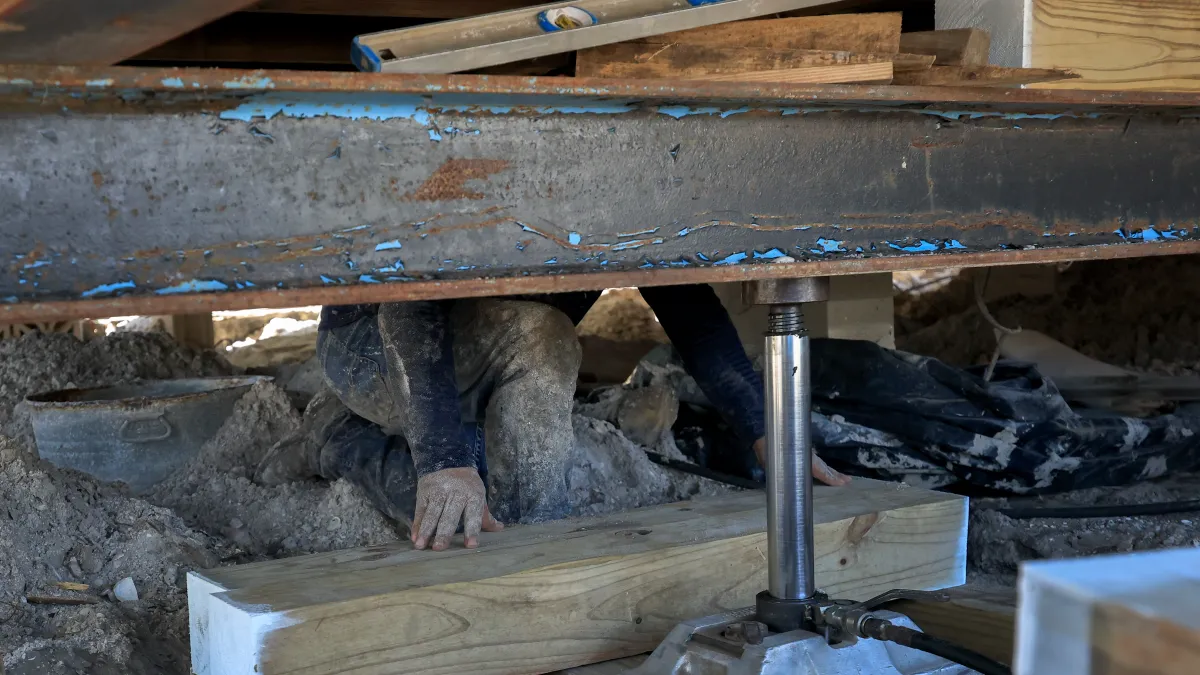
As part of our series of stories on how to flood proof your home, one of the ways that’s a hot topic is elevating your home.
Read more Woman arrested after crack pipe found in car while she was sleeping with child, report says
Elevating an existing home is a complex process that involves careful planning and skilled work. According to Chris Franzino with Alpha Foundations, the process can include disconnecting electrical, plumbing, and sewer lines, followed by the physical lifting of the structure—steps that require experience and precision.
“Disconnecting electrical and plumbing and sewer lines, and then the actual act of lifting the home itself can be very challenging,” Franzino explains.
For homeowners planning to tear down or build new, elevating a structure to meet FEMA requirements is generally straightforward. However, for those who want to remain in their current home, Franzino says there are several effective alternatives worth considering before pursuing full elevation.
Foundation Repair
One option is foundation repair, which is typically used when a home is experiencing settlement issues.
“Basically, it’s a steel tube about three inches in diameter that we drive down to the bedrock or load‑bearing strata,” Franzino explains. “We place brackets underneath the affected areas, and with that, we can lift the home several inches back toward its original position.”
This solution can help address issues such as an entire home sinking, one side settling, or structural shifting caused by changes in the soil.
Encapsulation
Another approach is encapsulation, which addresses moisture problems beneath the home.
Read more Cooper City High placed on lockdown after potential threat, Broward School officials say
“We install a perimeter drainage system along with pumps to remove water as quickly as possible,” says Franzino. “Then we add an air exchanger and dehumidifier to pull moisture out of the air and maintain a stable environment under the home.”
Encapsulation can help prevent long‑term damage related to excess moisture and water intrusion.
Concrete Lifting
A third option is concrete lifting, which targets soil failure beneath concrete slabs.
“This isn’t a concrete problem—it’s a soil problem,” Franzino explains. “We inject material beneath the slab to properly compact the soil. As it’s injected, it lifts the concrete back to its original position and creates a barrier that helps prevent future settlement and erosion.”
While the exact cost of these solutions varies depending on the home, the scope of work, and the specific issue being addressed, Franzino notes that each option can offer a meaningful improvement in stability and flood resilience without requiring full home elevation.
Homeowners interested in learning more about these services or scheduling a free estimate can visit Alpha Foundations’ website for additional information.
Read more DeSantis signs bill allowing Florida businesses to round to nearest nickel
Read more ways to flood proof your home.