
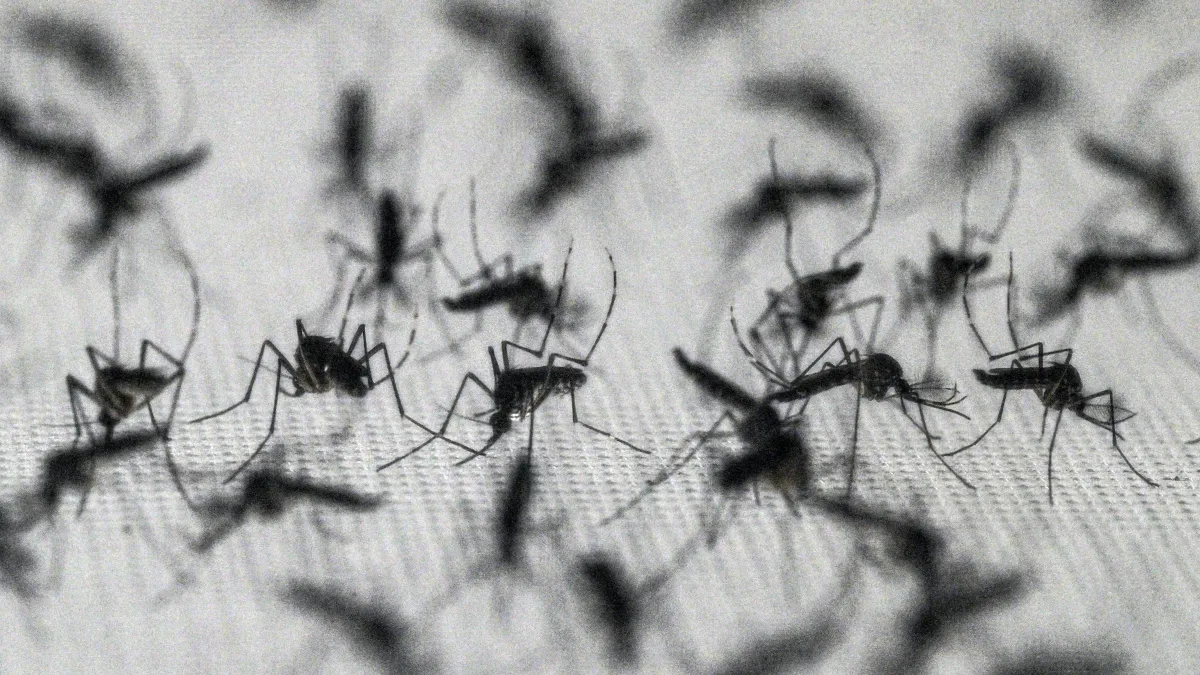
Google is looking to release up to 32 million “good” mosquitoes over two years in the state of Florida in order to control the population of these insects and reduce the instances of deadly disease.
Read more Florida Legislature approves DeSantis’ property tax cut proposal
The Debug project is years in the making. Since 2016, Google scientists and engineers have been working on an idea: releasing sterile mosquitoes that can’t bite (and therefore, can’t spread disease) and can’t produce eggs.
Until now, these mosquitos have been released in Singapore and made available in the British Virgin Islands.
Florida and California may not be far behind.
How does the Debug project work?
The Debug project focuses on one type of mosquito, the Aedes aegypti—”a carrier of dengue, chikungunya, Zika and yellow fever” that lives “almost exclusively in close association with humans.”
As Google puts it, the idea is to fight “bad bugs” with “good bugs.” Its “good bugs” are male mosquitoes that have a naturally-occurring bacteria called Wolbachia which makes them unable to have offspring with wild female mosquitoes. Male mosquitoes also can’t bite due to their very anatomy.
So, as the bugs mate but fail to lay viable eggs, “over time, there will be fewer and fewer bad mosquitoes,” the company says.
The technique does not use chemicals, toxins or involve genetic modification.
“Similar approaches have been used to safely combat other pests for decades,” the project’s website reads.
Read more Messi’s world: Breaking down the star’s World Cup records and stats for Argentina
What is planned for Florida?
An announcement from the Environmental Protection Agency (EPA) in the from May 6 states that Google requested an experimental use permit to release up to 16 million of these “good” mosquitoes per year for two years in both Florida and California.
The EPA is seeking comment until June 5 before deciding whether to issue the permit.
It was not immediately clear how quickly the project could start after that.
Has the Debug project worked before?
Google says Debug has been supporting the National Environment Agency (NEA) in Singapore since 2018 in the effort to suppress the spread of dengue.
Currently, it releases over 10 million mosquitoes weekly.
“Rigorous and extensive trials by NEA have shown that Project Wolbachia – Singapore has achieved 80-90% suppression of the Aedes aegypti mosquito population and more than 70% reduction in dengue incidents after 6 to 12 months of releases,” Debug said on May 11.
Debug’s work is centered on the Sterile Insect Technique, “an idea that’s been around since the 1950s” that has “worked on other kinds of bugs — like fruit flies, screwworms, and codling moths.”
Read more Cruise ship worker serving 30 years for hiding cameras in guests’ rooms facing local charges
For more on the Debug project, go here.