
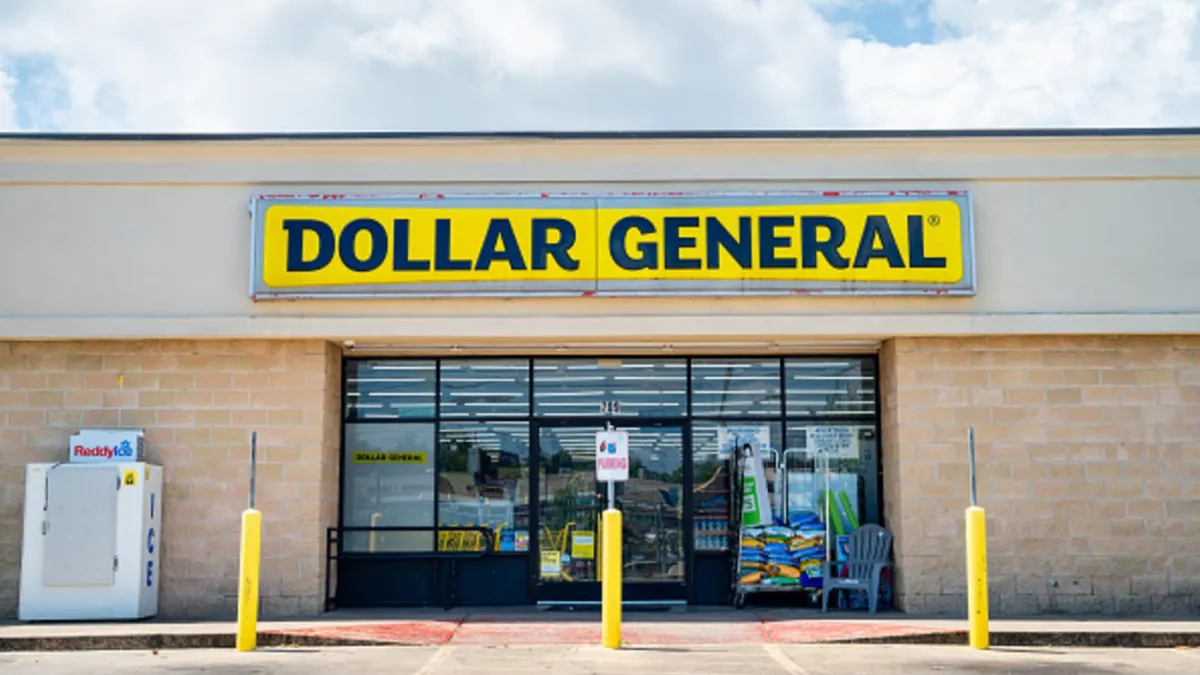
The Federal Trade Commission has sued the bargain chain Dollar General for what it characterized as “long-running deceptive pricing practices” by charging customers more once they reach the register than the prices that are displayed on shelves and in advertisements.
Read more Man accused of crashing into cruiser, fleeing from officers, arrested in Hollywood, police say
Twenty states, including Florida, joined in the complaint, filed by the U.S. District Court for the Middle District of Tennessee. It said that Dollar General, which operates 21,000 stores nationwide, failed to correct the issue despite what it said was “extensive corporate knowledge of the problem.”
“Dollar General has betrayed the trust of millions of American consumers and imposed significant financial harm on communities and consumers who are already struggling to make their paychecks last,” wrote Christopher Mufarrige, director of the FTC’s Bureau of Consumer Protection.
One of the issues, according to the agency, is understaffing. Although Dollar General has policies in place to align register prices with shelf prices based on guidance from corporate, thinly staffed stores lack the time to meet these demands. It says executives at the company are aware of the issue, citing internal communications.
“For example, in a news article sent to the CEO of the company and others, a former assistant manager in Illinois stated that she spent many of her shifts as the only person working in her store: ‘You’re lucky if you get to work two to four hours of your eight-to 13-hour shift with another human being.'”
Dollar General, based in Goodlettsville, Tennessee, just outside of Nashville, did not respond to a request for comment, but pushed back against the allegations in a statement posted on its website.
The company said the lawsuit suggests they “abandoned our mission and willfully disregarded the affordability needs of our customers. Nothing could be further from the truth.”
Read more Bodycam shows 2025 police shooting that killed gunman and bystander in Wynwood
“Our goal is 100% accuracy between shelf and register prices in every store. As with other retailers and despite our policies and procedures, occasional price discrepancies can occur. When that happens, our store teams are instructed, empowered, and expected to make things right for the customer. In recent years, we have enhanced our price-accuracy processes and remain committed to continuous improvement,” the company said.
However, the FTC noted dozens of examples in the 95-page lawsuit of employees at stores across Florida around the country denying customers price corrections. In one example from earlier this year, a Texas customer said when he complained about being overcharged from the advertised price, the employee reportedly told him “I have to overcharge you or I will get in trouble!!!!”
In Florida, a customer filed a complaint in April 2025 reporting he had “consistently, over the past year, found Dollar General lists items as being one price on their shelves or in online ads, but the register charges a higher amount,” according to the lawsuit. The customer said he checked more than 15 stores in his area and found the same problems. He also reported that Dollar General employees said they were not allowed to override the prices charged at the point of sale.
“In November 2025, a Florida consumer complained about being charged $2.50 for a bottle of Johnson & Johnson baby shampoo when the price on the shelf was $2.00. When this consumer raised the issue with the store employee, the employee gave the consumer the option of paying the higher price or not purchasing the baby shampoo,” according to the lawsuit.
The states joining the FTC lawsuit include: Alabama, Arizona, Arkansas, California, Connecticut, Florida, Illinois, Iowa, Kansas, Louisiana, Michigan, Mississippi, Nebraska, New Jersey, North Carolina, Ohio, Oklahoma, Tennessee, Utah and Wisconsin, according to the FTC.
Read more Nearly 2.8 million votes cast for General Election