
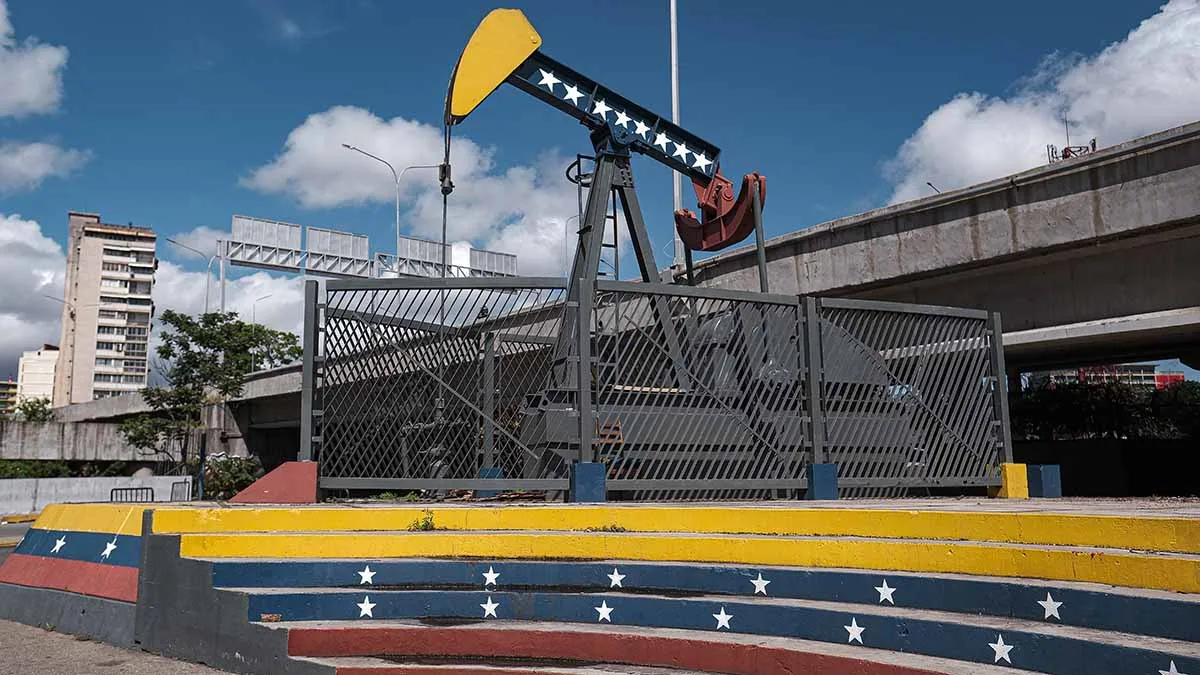
As Americans pay an average of $4 per gallon for gasoline amid ongoing tensions in Iran, President Donald Trump is touting a new agreement with Venezuela as a historic move that could strengthen U.S. energy security, attract major investment to Venezuela and potentially lower fuel costs.
Read more ‘I know what I did’: Jurors hear jail phone call of man admitting he shot Sunrise officer
But experts caution that any relief at the pump is unlikely to come quickly, while critics question what the deal means for Venezuela’s long-promised democratic transition.
Trump described the agreement as “the biggest oil deal in world history,” but analysts who study Venezuela say many questions remain about how the deal will be implemented and whether it will produce the economic and political changes supporters hope for.
Under the agreement, the U.S. government and a yet-to-be-named private operator in Venezuela have formed a company that has been granted rights to untapped oil fields for the next 100 years.
According to the Trump administration, the deal includes the development of 17 oil fields containing an estimated 65 billion barrels of oil. Trump has also said the oil could be used to replenish the nation’s Strategic Petroleum Reserve, which he argues has been significantly depleted.
The president has framed the agreement as a benefit for both countries.
“It was also a very good deal for Venezuela because you have the most powerful and the richest companies in the world going into Venezuela,” Trump said.
Venezuela’s interim president, Delcy Rodríguez, described the agreement as a step toward economic recovery and modernization of the country’s oil industry.
Despite the administration’s optimism, experts say consumers should temper expectations about immediate savings at the gas pump.
“This securing control over Venezuelan oil is probably a good thing from the U.S. perspective,” said Eduardo Gamarra, a Florida International University professor who specializes in Latin America. “But that doesn’t mean that we’re all automatically going to have 10 million barrels of oil.”
Venezuela’s aging and deteriorated oil infrastructure presents a major challenge. Experts have warned the country’s oil sector will require years and billions of dollars in investment before production can significantly increase.
As a result, analysts say the deal is unlikely to have a substantial impact on gasoline prices in the short term.
Questions About Democratic Transition
While the economic implications are drawing attention, the political fallout may be even more significant, particularly in South Florida’s large Venezuelan exile community.
Critics point out that the agreement is being negotiated with Rodríguez, a figure associated with the Nicolás Maduro government. For many Venezuelan exiles who have spent years advocating for democratic reforms, that raises concerns about whether the United States has shifted its priorities away from political change.
“It doesn’t seem like there’s really going to be a transition anytime soon,” Gamarra said.
Read more Consumer Reports: Do you need travel insurance?
The FIU professor added that an open electoral process in Venezuela remains unlikely in the near future.
“So it’s very unlikely that in the course of the next year or two, there will be an open electoral process in Venezuela,” he said.
Venezuelan activist José Colina said many members of the exile community feel disappointed by the agreement.
Colina argued that years of efforts to pressure Venezuela’s leadership toward democratic reform appear to have been sidelined in favor of economic negotiations.
He said it is painful to see the United States negotiate directly with officials tied to the current power structure in Venezuela without first securing commitments toward democratic transition.
Gamarra echoed concerns that many Venezuelan Americans are unlikely to embrace the agreement.
“My sense is that it probably is not going to satisfy a good portion of the Venezuelans who are here,” he said. “And it’s certainly not going to have much of an impact in terms of the price of oil to make the rest of us vote for this administration.”
Deal Becomes Political Flashpoint in South Florida
The agreement is already creating political fallout in South Florida.
Rep. María Elvira Salazar, a Republican, has faced criticism after reportedly deleting a social media post that was highly critical of the deal. She later posted a new message praising the agreement while also arguing that Rodríguez was the wrong person with whom to negotiate.
The issue quickly became a point of attack in Florida’s 27th Congressional District race.
Democratic candidate Eliott Rodriguez criticized Salazar, calling the deal a betrayal of Venezuelans and others who have opposed socialist governments in the region.
“This is not only a shameful portrayal of the Venezuelan people, it’s also a betrayal of everyone who has condemned socialism,” Rodriguez said.
NBC6 political analyst Alex Penelas said the Venezuela deal could become another issue shaping voter sentiment as Americans continue to grapple with high costs.
“The cost of living continues to increase. The war in Iran has not ended. The change promised in Cuba has not occurred,” Penelas said. “All these are reasons why voters may be looking for a change. And this deal in Venezuela may just be one more reason.”
Read more Italian man fled scene of Miami motorcycle crash that killed passenger, cops say