
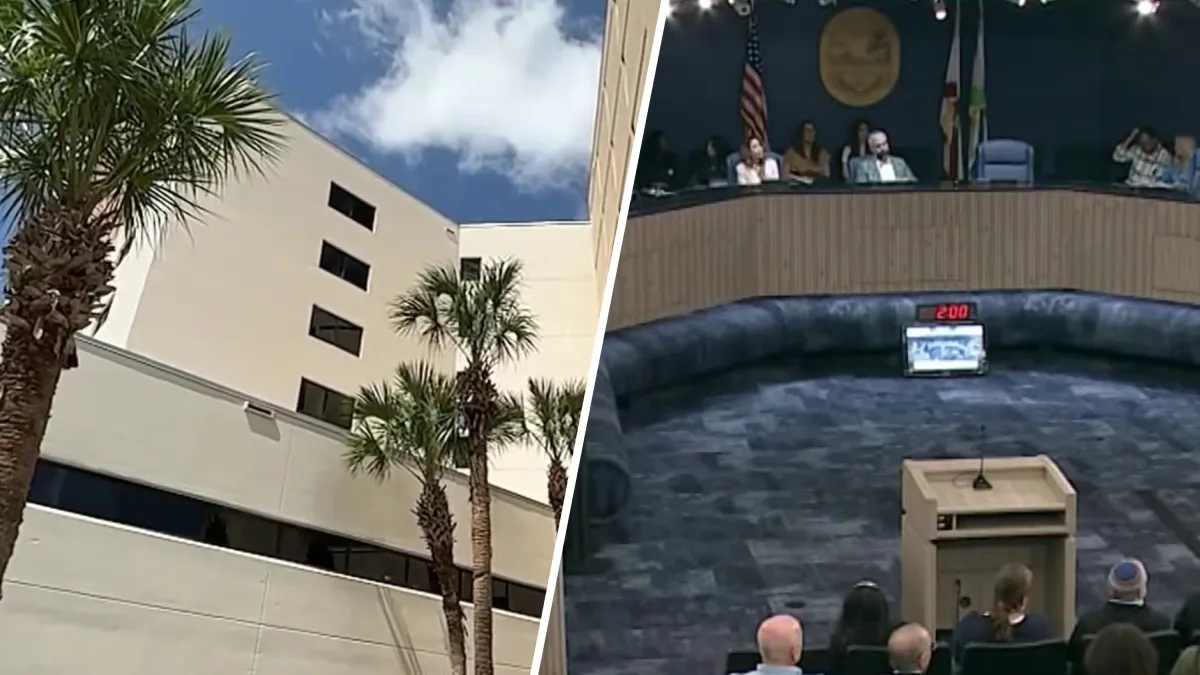
More than two decades after voters approved funding for a mental health facility, Miami-Dade County leaders are still debating when — or how — it will finally open.
Read more Mom speaks out after man pleads guilty to son’s 2021 murder in Miami Beach
At a commission workshop Wednesday, officials discussed next steps for launching the $51 million Miami Center for Mental Health and Recovery, a long-planned facility designed to serve people with severe mental illness.
Advocates say the need is urgent.
“This population shouldn’t be in the criminal justice system,” said retired Judge Steven Leifman, who has championed the project for years.
The building that would house the center remains closed — despite voters approving millions in funding to renovate it back in 2004.
Leifman said he hopes the latest discussions will move the project forward.
“We’re hopeful after today this will help move the item and it’ll help put it on an agenda,” he said.
The proposed facility would include 75 beds and offer a range of services, including medical care, education and job support.
Funding sources — including federal dollars and opioid settlement money — would cover operations for the first two to three years. But what happens after that remains a sticking point for some commissioners.
Miami-Dade Commission Chairman Anthony Rodriguez raised questions about sustainability.
“Are we going to start printing money from in somebody’s backyard in Hialeah?” Rodriguez asked.
He and others say they want clearer answers about long-term funding.
Other commissioners argue delays have already gone on too long.
“It’s an opportunity for us to take a building that we paid all a pretty penny for that I believe the voters want us to know, whether or not we’re going to vote on it or not,” said Miami-Dade Commissioner Juan Carlos Bermudez.
Fellow Commissioner Raquel Regalado emphasized the potential benefits of moving forward, even with a pilot program.
“Right now, these people are going into the jails,” Regalado said. “We want to prove the pilot and show that they don’t need to be there and that they shouldn’t be there and we can give them better care.”
The debate comes amid growing concern about how the criminal justice system handles people with mental illness.
Read more Former Spirit workers claim they are still owed pay and benefits, lawsuit says
Earlier this week, NBC6 Investigates reported on an attack on April 14 inside a Miami-Dade jail involving two inmates.
Dispatch audio captured the initial response: “Fight that occurred on scene between two inmates, one inmate has a head injury.”
A homeless man, Henry Diaz, suffered a brain injury while in custody at the Turner Guilford Knight Correctional Center (TGK), a county jail, allegedly at the hands of his cellmate.
Both men had been deemed mentally incompetent, and the accused cellmate had already been ordered transferred out of jail to a state facility.
For some leaders, cases like this underscore the need for change.
“We’re so concerned because every time that we have one of these incidents, it just proves the point about why we’ve been talking about this for 20 years,” Regalado said.
Still, there is some disagreement about who the facility would actually serve.
“This mental health asset is not a state hospital,” Rodriguez said. “So none of those inmates will qualify to be transferred over there. So we’re really not even solving a need.”
But Miami-Dade Public Defender Carlos Martinez, whose office represents Diaz, says the center could help ease the system’s backlog. He says some inmates would be eligible for services at the center.
“Henry Diaz is a man who, were this place open, he would not be in a coma right now,” Martinez said.
For the center to move forward, the proposal must be placed on the commission agenda for a full vote.
In a statement, the office of Miami-Dade Mayor Daniella Levine Cava expressed support for moving ahead:
“We have a viable path to open this Center, and we should move ahead with it. The need is clear, funding for the first three years has been identified, and the community has waited long enough. We will continue working with the Board and our partners to get this done.”
For now, the timeline remains uncertain — but the debate highlights a growing urgency to address mental health needs across Miami-Dade County.
Read more Mother of slain Coral Springs vice mayor running to fill her seat, records show