
Usually star players and teams highlight the FIFA World Cup, but sometimes the spotlight can fall elsewhere.
Read more Hialeah woman re-arrested for taking mom’s life savings after neglect arrest, records show
In major international soccer tournaments, sometimes it’s more enticing to see who qualifies from a certain group, especially when there are four strong teams in the mix.
That leads to the “group of death,” and the 2026 World Cup won’t be short of groups given it has expanded to 48 teams for the first time in history.
So, what is the group of death and is there one in 2026? Here’s what to know about the term:
What is the ‘group of death’ in soccer?
The group of death in soccer refers to a time when all four teams in a particular tournament group are of elite and equal quality. Essentially, it’s the deepest group where even the best teams could face early elimination.
Did the 2022 World Cup have a group of death?
For example, the 2022 tournament featured a Group E that included Spain, Germany, Japan and Costa Rica — two European powerhouses, Asia’s rising nation and a strong CONCACAF underdog, albeit one diminishing with quality.
Costa Rica previously shocked the world in 2014 when it finished first in a Group D that featured Italy, England and Uruguay. The two European sides did not advance.
Read more Miami woman charged in $34M scheme makes FBI’s ‘Most Wanted Fraudsters’ list
How many groups are in the 2026 World Cup?
With the tournament expanding to 48 teams, there are 12 groups of four teams each in 2026.
Is there a group of death in the 2026 World Cup?
There’s no clear-cut group of death in 2026 due to the increase in teams, thus reducing the chance of pitting four strong nations together. But there are a few standout groups.
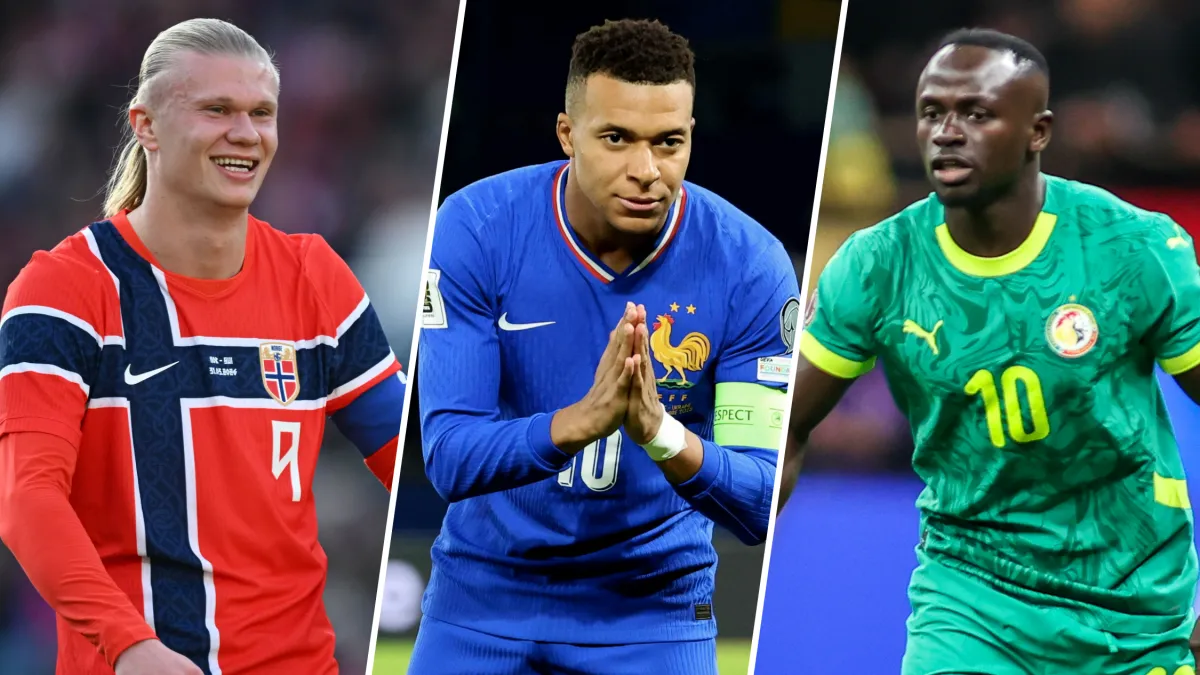
Group I features France, Norway, Senegal and Iraq. Iraq is the outlier, though France won the tournament in 2018 and finished runners-up in 2022. Led by Kylian Mbappe, Ousmane Dembele, Rayan Cherki and William Saliba, they will be in title contention again.
Norway features the star duo of Erling Haaland and Martin Odegaard, while more youngsters have come through in recent years. Senegal, anchored by Sadio Mane, is also filled with rising quality in Iliman Ndiaye, Pape Matar Sarr and Lamine Camara, among others.
Group F also looks promising with the Netherlands, Japan, Sweden and Tunisia. Tunisia is the underdog but is equipped with more talents playing across Europe. Japan is Asia’s best nation despite lacking a star striker, while the Netherlands is led by Virgil van Dijk, Frankie de Jong and Ryan Gravenberch, among others. Sweden needed the playoff qualifiers to get through but have attacking stars Viktor Gyokeres and Alexander Isak leading the line.
Read more Strong earthquake off northwest Cuba reportedly felt in Florida